Page

Monday, July 14, 2008

Electronic Discovery 2.0

Electronic Discovery, or “e-discovery” refers to the discovery of data from electronic storage and other electronic media for example e-mails, Hard Disk Drives, Databases, CAD/CAM files, websites and any other electronically-stored information which can be used as an evidence in a law suit.

Electronic Discovery 2.0, or “e-discovery 2.0” refers to the next generation of processes, technologies, and services that streamline and modernize the traditional e-discovery process as well as allows businesses to manage huge volumes of data, lower costs, and meet tight deadlines. In this Electronic Discovery process civil litigants seek to acquire information from both parties and from third parties.

In the early days Electronic Data & Evidence Recovery meant just handling over a few boxes of paper, but in today’s rapidly growing world where it involves terabytes of electronic data & valuable time, it is a different story. To deal with the increasing volume & complexity of e-discovery issues, companies have to adopt new technologies and processes.

If technology has created problem, then it can also solve it. In recent years lot of new technologies have emerged which enables organizations to store and search through their data to fulfill electronic discovery obligations.

As the cost of disk storage is reducing, people are moving from tapes to disks. This enables them to keep their data online and readily available for e-discovery from basic keyword search to sophisticated analysis tools. That mines all meta data from e-mails and groups them together for relevance and allow users to search thousands of mails and logs in minutes to identify and export the data.

From the company’s perspective Electronic Data Discovery has become a core competency and a part of doing business.

The Secrets Of Hard Drive Repair

Hard disk drives are fascinating storage devices, very useful and essential for modern computer systems. They store data or information (files), our programs (applications) and they help the computer in executing functions (commands), you make in a program. They are not, though, without burden or disadvantages.

One frustrating fact about hard drives is that they contain moving parts and they are very prone to failure. There are some situations where you may find that your computer won’t boot, show errors at startup, stuck in boot windows, and BIOS doesn’t work at all. In such situations, the data stored on the hard drive can’t be accessed.

These are the situations where general computer user can’t identify the real problem. He/she thinks that there are some software or hardware problem with the computer like operating system corruption, RAM problems, firmware corruption and mother board problems.

The users don’t think or know about the real problem and send their computer to the hardware engineer. But the main problem is not related to other hardware parts, the problem exists with the computer hard drive. It is a very big mistake to fetch your hard drive to computer hardware shop because if the hardware engineer tries to access data form it, the hard drive can further damaged.

In such situations, you need to fetch your hard drive to data Recovery Company. Data Recovery Company provides special data recovery service for retrieving data from physically damaged hard drives. The data recovery can’t be performed in the general environment, so they use data recovery Clean Rooms.

The hard drive recovery experts replace the damaged parts of the hard drive in Clean Room and make it accessible. The damaged parts generally include hard drive head, spindle motor and head actuator.

The data recovery expert may also use data recovery software if the data can’t be recovered even after repairing or replacing the damaged parts of the drive. The data recovery software are used according to the operating system and file system. The data recovery service is same for all operating systems and their respective file systems.

Stellar Information Systems Ltd is the most advanced and experienced data Recovery Company. Stellar has over 15 years of experience in providing data recovery solutions around 137 countries throughout the world. The data recovery service by Stellar is provided in the Class 100 Clean Rooms.

Company has the best of the industry, data recovery experts who are fully qualified and experienced. The data recovery professionals of Stellar understand the needs and importance of data for a user and recover it in all of the cases.

When it comes to data recovery software, Stellar has the best data recovery software. The data recovery software are provided for all computer operating systems such as Windows, Macintosh, UNIX, Linux and Novell. These data recovery software can recover data from all of the file systems supported by these operating systems.

Wednesday, February 6, 2008

Restore Your Computer's Performance with Windows XP

If your computer seems slower than it used to be, it probably is. My one-year old Dell laptop is much slower now than when it was new. Over time, computers get slower for a variety of reasons: files become disorganized, unnecessary software consumes resources, unused network drives slow start up, or too many programs automatically run at start up. Larger, serious issues can dramatically slow your computer's performance too. You may have a virus or need to troubleshoot problems by clean booting.
Fortunately, Windows XP includes tools to clean your computer and restore its performance. As I write this column, I'll be cleaning up my own computer and explaining how its performance improves. I'll cover Backup, Disk Cleanup, Disk Defragmenter, Add or Remove Programs, and the System Configuration tool.

Back Up First
Back up your computer before you run any system tools or do any troubleshooting. This is not just an over-cautious warning. Some of the steps I recommend in this column can cause pre-existing but hidden problems to surface, which may keep your computer from starting. Windows XP includes Backup, a tool that helps you protect your data.
To open the Backup or Restore Wizard
* Click Start, point to All Programs, point to Accessories, point to System Tools, and then click Backup.
For information on how to use this tool, see Ed Bott's column, Backup Made Easy and the Microsoft Knowledge Base article, How to Use Backup to Restore Files and Folders on Your Computer in Windows XP.
Before I make any changes, I'm going to time my computer to see how long it takes to restart. That way I know which of the changes helps the most. My computer took about three minutes to shut down, restart, and then open my e-mail client and browser. Of course, I hope to improve the computer's overall performance, but the time it takes to restart is easiest to measure.
Clear Out Forgotten Programs
The first step in tuning up your computer's performance is to remove any unnecessary programs. I install new programs all the time. Sometimes I'm thrilled with the new program and I continue to use it. Other times, it doesn't do what I hoped, and the program sits on my computer consuming resources and hurting performance.
Follow these steps to remove unneeded programs:

1. Click Start, and then click Control Panel.

2. Click Add or Remove Programs.
3. Scroll through the list and examine each program. Windows XP lists how often you use a program and what day you last started it. As shown in Figure 1, the Age of Mythology Trial is a good candidate for removal from my computer. Though I liked the game, I haven't used it recently and it's consuming a lot of disk space. You shouldn't remove anything labeled as an Update or Hotfix, however, because they improve the security of your computer.

Figure 1: The Add or Remove Programs window.

4. Click each program you no longer need, click the Remove button, and then follow the prompts to uninstall it.
You may have to restart your computer after removing a program. After your computer restarts, repeat the steps above to remove more programs.
Free Up Wasted Space
Removing unused programs is a great way to free up disk space, which will speed up your computer. Another way to find wasted disk space is to use the Disk Cleanup tool by following these steps:
1. Open My Computer, right-click Local Disk, and then click Properties.
2.On the General tab, click the Disk Cleanup button. Disk Cleanup will spend a few minutes examining your disk.
3.The Disk Cleanup dialog box opens. As you can see in Figure 2, it found almost three gigs of space on my computer that it could free up!

Figure 2: The Disk Cleanup tool.
4.Select the desired check boxes in the Files to Delete list, and then click OK. Disk Cleanup will spend several minutes clearing space.
5.If you have more than one hard disk, repeat this process for each hard disk listed in My Computer.
You can save yourself some time by automating the disk cleanup process. For more information, read the Microsoft Knowledge Basic article, How to Automate the Disk Cleanup Tool in Windows XP.
Defragment Your Computer
I hate newspaper articles that start on the front page but continue somewhere in the middle of the newspaper. I could get through the article much faster if it was printed on consecutive pages like a magazine article. Files on your computer can either be fragmented like a newspaper, or unfragmented like a magazine. Over time, more and more files become fragmented. When a file is fragmented, it takes longer for the computer to read it because it has to skip to different sections of the hard disk—just like it takes me a few seconds to find a page in the middle of a newspaper. Figure 3 compares how a computer reads unfragmented and fragmented files.

Figure 3: Fragmented and unfragmented files compared.

You need administrator privileges to defragment a drive or volume. Although fragmentation is complicated, it's easy to defragment your computer by following these steps:
1.Open My Computer, right-click Local Disk, and then click Properties.
2.On the Tools tab, click Defragment Now. The Disk Defragmenter opens.
3.Click your first hard disk, and then click Defragment. As shown in Figure 4, Disk Defragmenter will work for at least several minutes, though it may take several hours.

Figure 4: The Disk Defragmenter tool.

4.If you have more than one hard disk, repeat this process for each hard disk listed starting at Step 3.
My laptop's files were not terribly fragmented, so defragmenting them didn't speed it up much. However, after defragmenting the hard drive on my desktop computer, Windows and other programs started about 20% faster!
Disconnect Unused Network Connections

If you've ever had a network with more than one computer, you probably found it useful to share files between the computers by mapping a network drive. Network drives allow one computer to read and write files to another computer's hard disk as if it were directly connected. I use network drives all the time, and for me, they were the most significant source of slowness.
The problem with network drives is that Windows XP will attempt to connect to the network drives when Windows starts. If the remote computers don't respond immediately, Windows will wait patiently. Additionally, some programs will attempt to connect to the network drives when you browse for files and folders. If you've ever tried to open a file and had to wait several seconds (or minutes!), it's probably because the program was trying to establish a network connection—even if the file you are opening is on your local computer.

I am not as patient as Windows, and I'd rather not wait for unused network connections to respond. To reduce this problem, disconnect any unused drives by following these steps:

1.Open My Computer.
2.On the Tools menu, click Disconnect Network Drive.
3.Select the network drives that you no longer need, and then click OK.
After I disconnected the network drives on my computer, my computer was able to restart in 1 minute, 45 seconds—about 40% faster!

Remove Autostart Programs
The next step in restoring your computer's performance is to identify any unnecessary programs that start automatically. Often, programs configure themselves to run in the background so that they appear to start quickly when needed. Some of these programs show an icon on your taskbar to let you know that they're running, while others are completely hidden. These autostart programs probably won't noticeably slow down your computer as it starts up, but they will steal away trace amounts of memory and processing time as your computer runs.
Windows XP comes with the System Configurationtool (Msconfig.exe), an excellent way to manage the startup process. To start it:
1.Click Start, click Run, type Msconfig, and then press Enter.
2.On the Startup tab, you'll see a list of all the programs and processes that are set to run when Windows XP loads.
3.Speed up your overall start time by clearing the check box next to any item you think you don't need.
4.Click Apply, and then restart your computer for the changes to take effect.

My favorite way to examine autostart programs is to use the Autoruns freeware tool from Sysinternals. Autoruns lists every program that will automatically start and allows you to quickly delete the link to the program. Many autostart entries are important parts of Windows XP, including Userinit.exe and Explorer.exe. So you should not simply delete everything that you don't recognize. Instead, you should look up each entry at Paul Collins' Startup Applications List to determine whether you want it to start automatically.
For example, Figure 5 shows Autoruns revealing a file called nwiz.exe that is set to start automatically. I visited The Startup Applications List, typed in nwiz and discovered that it's used to set my desktop layout preferences. I'd like to keep this functionality, so I won't delete it.
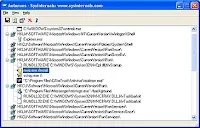
Figure 5: The Autoruns freeware tool.

I also found a file named Wzqkpick.exe. After reading the description at The Startup Applications List, I decided I don't need to load that file automatically. I deleted the link using Autoruns by right-clicking it and then clicking Delete. This procedure works best for advanced users of Windows XP. If you aren't sure a program is unneeded—leave it!
The Startup Applications List may provide instructions for removing the startup program. If available, you should follow those instructions instead of deleting the link by using Autoruns.

How to Fix Bigger Problems
Many of the Windows XP Performance and Maintenance newsgroup users are experiencing serious, sudden performance problems. One day, their computer was fine and the next it was painfully slow. This type of problem is often caused by a computer virus or failing computer hardware. The suggestions in this article probably won't fix those types of problems. Instead, perform a virus scan on your computer. If that's not the issue, you should contact your computer vendor's technical support team for additional assistance. The troubleshooting process for this type of problem requires the knowledge to examine the computer's performance on a process-by-process basis, and usually includes a "process of elimination" phase where drivers, services, and hardware are removed/replaced one-by-one until the problem disappears. There's a very good chance that the computer won't start at all at some point in this process, so it's best to have support during the process.

Searching for "Windows XP Performance" on the Internet turns up a large number of performance tweaks. Some of these are useful, but most should not be attempted unless you understand exactly what you are doing. In particular, many of the tweaks that claim to improve your performance may only help under very specific circumstances. For example, in our own Windows XP Performance and Maintenance newsgroup, one user recommended disabling Internet Connection Firewall to solve a performance problem. Even if this did improve performance, it would leave the computer vulnerable to attacks from the Internet. I'd rather have a slightly slower computer than a hacked computer!
Expert Zone columnist Tony Northrup is an Internet engineer, a part-time photographer, and author of dozens of books and articles. He writes to help people safely use the Internet to communicate, share, and learn.

Thursday, January 24, 2008

Erase A Hard Disk Drive Permanently: How

A hard disk drive also known as hard drive or hard disk is a non-volatile storage device, which has the facility to stock up digitally encoded data on rapidly rotating platters and magnetic surfaces. Its design consists of a spindle which can hold one or more flat circular disks known as platters, onto which the data is recorded. It has the ability to store data more than floppy disk drives and can also access and transmit data at faster pace. Today, the boost in disk space and access speeds of hard disk drive have further facilitated the marketable viability of clients products that need great storage capacities, like digital audio players and video recorders.

However, the main problem that we are coming across is erasing data or files from hard disk permanently. Most of us think that erasing files and emptying the Recycle Bin will help in permanently get rid of those files. In fact, in most of the cases Recycle Bin tells that emptying the Recycle Bin will permanently remove items. But this statement is totally incorrect. You have to understand even after emptying the Recycle Bin, the files can be easily recovered by data recovery programs. Making the best use of delete key on actually removes the shortcuts to the files and makes them undetectable to users. Deleted files still reside on the hard drive and a rapid Google search will automatically show options for system recovery software will further allow to restore that data.
Apart from erasing the files or data from hard drive, many people also consider that the effective way to erase hard drive data is by formatting the hard drive. Though formatting the hard drive is somewhat secure than just erasing the files, but you should also note that formatting a disk does erase only the address tables. It makes it much more difficult to recover the files. However a computer specialist would be able to recover most or all the data that was on the disk before the reformat.
Disk Wiping is the next new technique that is gaining its popularity these days. Disk wiping is a new secure method and ensure that data, including individually licensed softwares on your computer and storage devices is irrecoverably deleted before recycling. Disk wiping is better method in comparison to erasing files or formatting the hard drive, because this method basically overwrites your entire hard drive with data, several times and once you format your hard drive, you may find it impossible to get back the data which was present on the drive before the overwrite. Though disk wiping algorithms vary from product to product, they usually write the entire disk with a number (zero or one) and then a reformat is required. Today, there are many products available in the market that you can purchase or download to perform secure disk wipes. Moreover, the two free programs that are gaining recognition for erasing data from your hard drive are:
(1) Darik’s Boot and Nuke: This is an application that you can install on a bootable floppy or CD Rom. Boot and Nuke uses several methods to wipe the data on your drive to an unrecoverable state. With the facility to delete the contents of any hard disk that it detects, makes this application a suitable utility for urgent situation data destruction.
(2) Eraser: This is next famous software and does a great work of cleaning your hard drive by removing all magnetic and solid state memory. It is an advanced security tool, which further allows you to entirely remove sensitive data by overwriting it several times with carefully selected patterns.
Now once one of these procedures is completed the drive is ready to be given away without fear of privacy invasion or fraud. These tools provide full confidence about your deleted sensitive personal information that is unrecoverable. In addition to this it also provide easy to comprehend and secure and affable graphical user interface GUI for permanent data removal.
Finally if you are still uncertain or want to ensure that deleted files are permanently gone, employ a file deletion management system. Today there are many file deletion programs designed to spot and permanently purge your computer of previously deleted files. These solutions initially scan a computer, find traces of previously erased data and finally remove discarded data including e-mail messages.

How Data Recovery Programs Work

The Explanation And Working Of Data Recovery Programs:

When it comes to hard disk recovery, the best method is to insure that you will never need it. Besides making frequent backups, the following measures will keep your system running smoothly.

Antivirus Protection New viruses are invented every day, and system security is a concern for every business. Malicious software can damage your system to the point where it will not even boot up. The latest versions of Windows are the favorite targets of malicious programs such as spy ware and viruses, and it is helpful to use 2 or more antivirus/anti-spy ware programs to prevent destruction or theft of your data.

Spy ware Scanner The clues that spy ware is on a computer include a barrage of pop-up ads, a hijacked browser, a sudden or even repeated change of your computers Internet home page, the appearance of a new toolbar or new screen icons, malfunctioning keys, random error messages, and most of all, sluggish computer performance. Any system with access to the internet is prone to this problem, but there is software to block spy ware installation.

Further Precautions are to be taken:

In addition, make sure all employees using the office network do not download from unknown sites, and set your internet browser security at 'Medium' or higher. Install individual firewalls to prevent uninvited users from accessing your network. A firewall blocks unauthorized access to your computer and will alert you if spy ware already on your computer is sending information out. Purchase an anti-spy ware program from a vendor you know and trust. Set it to read on a regular basis, at least weekly and if possible each time you run your computer. Delete any programs the anti-spy ware program detects on your computer.

Computer Maintenance The best way to avoid having to use file recovery software is to be sure that no corrupt data is stored on your computer. Companies like Norton sell disk optimization programs keep your network running at top speed, correct problem files and maximize the available space on your hard disk. Run disk optimization and anti-virus programs at least once a week.

Protect Your Hard Disk:

Hard Disk Recovery There are disk recovery applications specifically geared to recovering files of a certain format, like graphics files as opposed to word document files, and there are general-purpose programs to hunt for any type of misplaced file regardless of the format. There is no program on the market that can guarantee recovery of every lost file, but you are able to increase your chances for recovery by selecting the appropriate program for the file you are trying to save.

Do-it-yourself programs are a lot less expensive than hiring a data retrieval company that specializes in information recovery, and to save money you should at least attempt to utilize this type of program before calling a professional.

In addition to recovering deleted files, there exist information recovery programs that can restore files after you have formatted the drive, after a power failure, natural disaster, or even files damaged by a computer virus.

Because of the duplication of data, it is possible to recover files from one or another disk when the need arises. As you might expect, RAID disk repair is quite a complicated process. However it is one of the most foolproof methods of data storage because the RAID architecture strategically distributes information randomly across the array. However, this sort of architecture demands the services of a recovery professional. Generally speaking when a hard drive is received by a data recovery firm, the first thing they do is evaluate it, and determine what recovery solution will be necessary. If the drive failure is a logical issue as mentioned earlier, then a scan of the drive will be performed to try and repair the file system corruption. Sometimes a partition can be repaired and the drive restored to the status that it was before the failure.